Home / Buyer Guides / Measuring Guide
Buyer GuideHow to Measure Windows for Custom-Made Window Screens
Custom screens are built for one specific opening — a screen is only as good as its measurements. This is the same checklist we ask our distributors to use before sending a size list. Follow it, and the screens arrive fitting the openings they were ordered for.
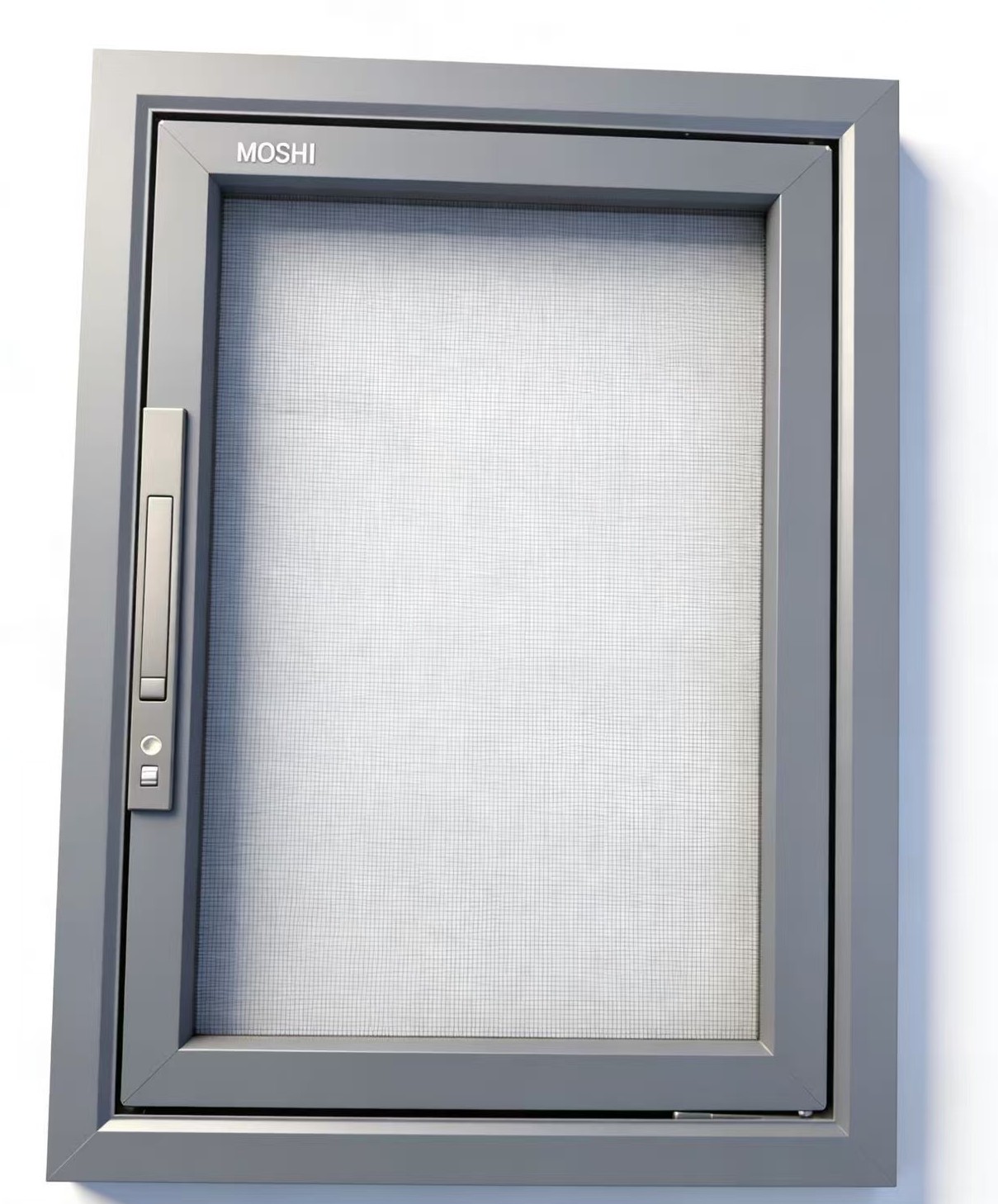
Before you start
You need three things: a steel tape measure (cloth tapes stretch and lie), a notebook or a spreadsheet, and a phone for photos. Record everything in millimetres — one unit, no conversions. If your market works in inches, convert once, at the end, and write the unit next to every number.
Step 1 — Measure the opening, not the glass
Measure the window opening the screen will cover: width from the inside edge of the frame on one side to the inside edge on the other, and height the same way, top to bottom. The glass pane is always smaller than the opening, and screens sized to the glass come back too small — this is the single most common measuring error we see.
While you are there, look at the flat frame surface around the opening where the screen will sit. It should be clear along the full perimeter: no handles, locks, hinges, tiles or trim crossing the mounting area.
Step 2 — Three points, and the smallest one wins
Openings — especially in older buildings — are rarely perfectly square. So measure the width at the top, middle and bottom, and the height at the left, centre and right. Write down all three numbers, then use the smallest of each set as your ordering size. A screen made to the smallest measurement fits everywhere; one made to the largest jams at the tightest point.
Step 3 — Note what sticks out, and which way things move
Record anything that protrudes into the screen area: handle height and position, the hinge side, and the opening direction of casement windows. For casement screens, tell us which side the handle is on when viewed from inside. Two windows with identical sizes but mirrored handles are two different products.
Step 4 — One line per window: the size list
Never send sizes as a paragraph of text. Send a list — one line per window size — like this example:
| Reference | Width (mm) | Height (mm) | Qty | Notes |
|---|---|---|---|---|
| Living room | 865 | 1210 | 4 | Handle on left, viewed from inside |
| Kitchen | 640 | 980 | 2 | — |
| Bedroom 1 | 890 | 1195 | 3 | — |
Add the frame colour for each line if a project mixes colours. Count the total quantity per size twice — a transposed digit in one line repeats across every unit of that size.
Our size range: we build rectangular screens from 280 × 380 mm up to 1000 × 2000 mm. Our frames are rectangular only — for arched or angled openings, talk to us before measuring a full project around them.
The five mistakes that cause wrong-size screens
1. Measuring the glass instead of the opening — see Step 1.
2. Measuring one point only — out-of-square openings need the three-point check.
3. Mixing units — 86.5 written without a unit becomes 865 mm, 86.5 cm or a very expensive typo.
4. Copying one window to all — windows in the same wall can differ by 10–20 mm; measure every size group at least once.
5. Forgetting the handle — the screen fits the opening but the handle has nowhere to go.
Send photos with the list
One photo per window type, taken straight-on from inside, helps us confirm the mounting surface, the handle position and the frame colour against your list. It takes a minute per window type and prevents the most expensive kind of email: the one that starts with "the screens arrived, but…"
Measuring for magnetic built-in blinds
A magnetic blind is built into your window unit, so the frame itself decides whether it fits. The method is different from screens: you measure the inside of the frame, and you check the frame is wide and deep enough before you order.
1. Measure the inside of the frame. Width and height between the inside edges of the window frame — not the glass, and not the outside of the frame. Measure each opening separately, accurate to 1 mm (0.1 cm).
2. Check the outer frame is at least 20 mm wide. The blind unit mounts on the window's outer frame, so it needs at least 20 mm of flat mounting width all round. Measure the flat face of the frame, not the rounded edge.
3. Check the frame is at least 15 mm deep. The blind unit needs 15 mm of frame depth to sit in. Measure from the glass surface to the face of the frame. A frame shallower than 15 mm cannot take a built-in blind.
4. Check the window type — and the size. Built-in blinds do not fit sliding windows. For drilled (screw-fixed) installation, keep the unit within 2.5 m². Send sizes the same way as for screens — one window per line, with a photo of each window type.
Our range: magnetic blinds from 170 × 500 mm; width up to 1900 mm, height made to order. Frames are rectangular only. If an opening is outside the range, or the frame is too narrow or too shallow, tell us before ordering — we will confirm what can be made.
Have a size list ready?
Send it to us — quotation within 24 hours, samples ready in 5–7 days.
Get a Quote Chat on WhatsApp